


LEONARDTOWN, Md. — With more than $1.4 million in state cannabis reinvestment money sitting unused, St. Mary’s County commissioners on Jan. 27 grappled with how, and how soon, to move forward amid lingering uncertainty from the state.
County Attorney John Houser briefed the board on the legal framework surrounding Maryland’s Community Reinvestment and Repair Fund (CRF), a program funded largely through cannabis tax revenue and one-time license conversion fees. The fund is intended to support community-led initiatives in low-income and “disproportionately impacted” areas affected by historic cannabis enforcement.
“As we sit today, we have $1,434,177.69 in CRF funds received by the county,” Houser said. “None of that has been spent, none of that has been distributed.”
St. Mary’s County qualifies for CRF funding primarily through the Lexington Park ZIP code 20653, which the state’s Office of Social Equity identified as disproportionately impacted after accounting for more than 150% of the statewide average for cannabis-related charges in the early 2000s. That designation determines both eligibility and the county’s share (roughly 1.52% of statewide CRF distributions).
While state law also allows funding to flow to low-income areas, Houser said that term remains undefined, leaving counties without clear direction.
“There is no more definition or clarity on what low income means than we’re directed to spend it on low-income areas,” he said, noting that counties risk having to reverse decisions once state regulations are finalized.
The commissioners expressed frustration that promised regulations from the Office of Social Equity, due by Oct. 1, 2025, have yet to be published, even as other counties begin spending their allocations.
“I think there’s some angst that this money’s sitting there and it’s not being put to use,” Houser told the board. “And I get it.”
Much of the discussion centered on whether to proceed now using existing statutory guidance or wait for formal state rules. Several commissioners urged action, citing the temporary nature of the funding and concerns that future legislation or administrative fees could reduce local control.
“Paralysis by analysis,” one commissioner said, summarizing the concern that waiting could cost the county opportunities to reinvest in its communities.
Houser outlined two primary paths forward: limiting initial grants to ZIP code 20653, which carries the least legal risk, or creating a county definition of “low income” to expand eligibility, a move that could invite complications if state rules differ.

Commissioners also debated how the money should be distributed, with general agreement that funds should be awarded through a grant process to nonprofit or community organizations and focused on one-time, high-impact projects rather than recurring expenses.
“This funding, it’s important to remember, isn’t money we’re going to actually spend,” Houser said. “We’re going to grant it out to other organizations to make use of.”
By the end of the discussion, the board signaled consensus on the need to move forward and asked Houser to return with a draft program outlining an application and review process as early as February, even as uncertainty remains at the state level.
“There’s no requirement you spend all the money all at once,” Houser said, “but there is a clear desire from the board right now to move forward in some fashion,” noting that the cannabis tax revenue stream supporting the CRF is authorized through 2033.
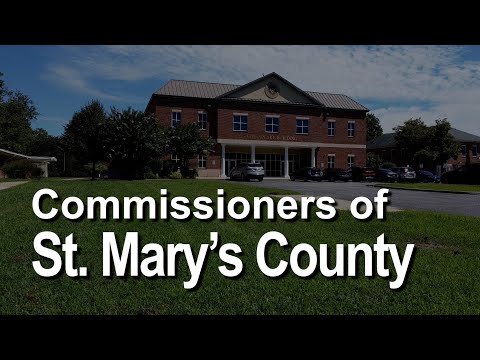
You can watch the discussion here starting at 1 hour and 13 minutes:
Got a tip or photo? Text us at 888-871-NEWS (6397) or email news@thebaynet.com.
Join The BayNet Membership for exclusive perks and zero ads.
Don’t miss a story—sign up for our newsletter!

If I understand this:
– State gives County cannabis tax money
– This money is to be used for projects/ improvements
– This money is to be used only in areas where highest arrests occur for illegal cannabis activity arrests
– Vague guidelines by the State say the County cannot spend it, but must approve a nonprofit organization to spend it
Sounds like it’s turning into a means for scamming State Government funds under the guise of ‘helping’ communities known for having a drug problem…kinda like what’s happened in Minnesota.
How about we build an aquatics center somewhere central/north for youth sports.
That suggestion would not comply with the initial grants being limited to the 20653 zipcode area and the north end of St. Mary’s would probably not qualify under the ” low income” ruling .