


LEONARDTOWN, Md. — The Commissioners of St. Mary’s County authorized the Department of Land Use and Growth Management on July 21 to apply for a $40,000 Maryland Historical Trust grant to document historic agricultural buildings that are disappearing from the county’s landscape.
If awarded, the grant would be combined with $40,000 already held in the county’s Historic Preservation Revolving Fund, creating an $80,000 project.
The existing money came from sales of Kirk Ranzetta’s book, “I’m Goin’ Down County: An Architectural Journey of St. Mary’s County.”
Jessica S.B. Andritz, director of the Department of Land Use and Growth Management, said the book offers photographs and historical information about the county’s buildings and rural heritage.
“It really tells a wonderful story of our rural and agrarian culture,” Andritz said.
The commissioners’ action only authorizes the county to apply for the grant. It does not guarantee that the Maryland Historical Trust will award the money.
Documenting Disappearing Buildings
The proposed project, titled “Documenting St. Mary’s County Agricultural Support Buildings,” would focus on structures such as corn cribs, dairies, smokehouses, meat houses, detached kitchens, poultry houses, livestock barns and other farm outbuildings.

Tobacco barns would not be included because they have already been extensively documented through previous preservation efforts.
The county would use a competitive request for proposals process to select an architectural consultant. The consultant would research the buildings’ histories, document their original appearances when possible and identify alterations made over time.
The work would include detailed photographs, measured drawings, sketches, written histories and a final report. Information would also be added to the Maryland Historical Trust’s cultural resources database.
Patricia Samford, vice chair of the St. Mary’s County Historic Preservation Commission, said many agricultural support buildings were only briefly mentioned during earlier surveys that concentrated primarily on historic homes.
“They would mention, you know, that there was a superb granary or a really nice example of a meat house,” Samford said. “But they would not draw those buildings or photograph those buildings.”
The commission has identified approximately 20 to 30 properties that could be considered for the project. Property owners would have to grant permission before buildings could be surveyed.
Samford said some structures may have already disappeared, while other property owners may decline to participate.
The buildings “are disappearing from the landscape at an alarming rate,” she said.
Hewitt Questions Consultant Expense
Commissioner Mike Hewitt questioned why the county needed to hire a consultant and whether local historians or experts could perform the work.

“I just don’t like spending money on consultants for things we may already know,” Hewitt said. “What would you think they would find that we don’t already know about our county?”
Samford explained that the project requires an architectural historian trained to produce measured drawings, cross-sections and detailed interior and exterior documentation. The specialist would also examine how the structures were changed over time.
Hewitt suggested consulting experts associated with Historic St. Mary’s City or St. Mary’s College of Maryland, including archaeologist Julia King.
Samford said King is an archaeologist, not an architectural historian, and would not be qualified to complete the specific architectural drawings required for the project. Andritz also noted that qualified local experts would be able to compete for the work through the county’s request for proposals process.
Hewitt later questioned whether the county’s existing $40,000 could be used for another preservation project.
“Is this the best use of that money?” he asked.
Andritz said the funding is subject to restrictions because it was designated for historic preservation. The Historic Preservation Commission was allowed to identify what its members believed would be the best use of the money.
Commissioners Authorize Application
Despite his concerns, Hewitt did not vote against the motion. The commissioners approved the grant application without opposition.
If awarded, the Maryland Historical Trust would provide $40,000, and the county would supply the required $40,000 match from its existing preservation fund. According to county documents, the match would not require additional county funding.
The anticipated project period was revised to run from November 2026 through November 2028 because the grant money could become available earlier than initially expected.
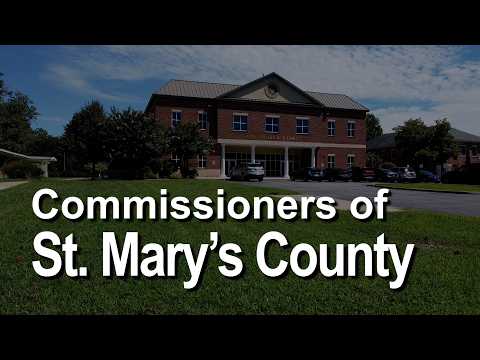
Watch the full request for the grant below at 37:40.
Got a tip or photo? Text us at 888-871-NEWS (6397) or email news@thebaynet.com.
Join The BayNet Membership for exclusive perks and zero ads.
Don’t miss a story—sign up for our newsletter!
